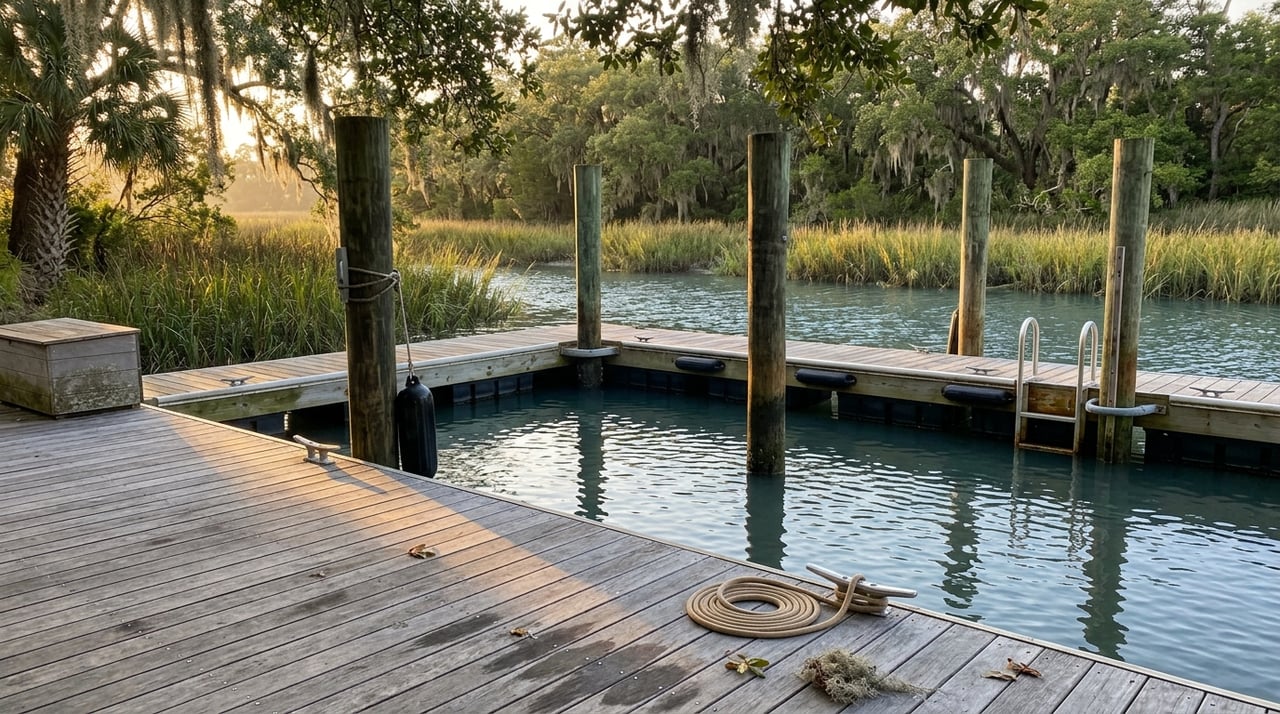
Yacht Club St. Simons Boat Slips: A Buyer’s Guide
July 16, 2026
July 16, 2026
If you love the idea of stepping from your home to your boat, Yacht Club on St. Simons Island is easy to notice. This gated waterfront community is often described as having about 39 homes, deeded boat slips, and access to a community dock on the Frederica River. If you are considering a purchase here, it helps to understand what a deeded slip can mean, what questions to ask, and how local boating conditions can affect daily use. Let’s dive in.
Yacht Club is a gated waterfront neighborhood on St. Simons Island with roughly 39 homes, according to local brokerage marketing. The community is noted for convenient access off the island and proximity to Golden Isles Marina. For many buyers, the headline feature is simple: homes in Yacht Club are commonly marketed with a deeded boat slip and community dock access.
Public MLS remarks for individual properties also place Yacht Club on the Frederica River and describe it as a riverfront gated subdivision. That setting can be especially appealing if you want water access tied closely to home ownership instead of relying on separate marina availability. In a market where boating access can vary widely, that is a meaningful distinction.
In Yacht Club listings, a deeded slip is typically presented as part of the property package. Some listings specifically note a deeded dock slip, while others describe a boat slip at the community dock on the Frederica River with access toward the Intracoastal Waterway and Atlantic Ocean. In practical terms, that usually signals something more permanent than a simple rental arrangement.
That said, deeded does not always mean the same thing in every transaction. Before you buy, you will want to confirm whether the slip is deeded directly with the home, separately deeded, or assigned through the homeowners association. The deed, plat, title work, and HOA documents should all line up clearly before you assume exactly what transfers at closing.
A boat slip can be a major part of the value story, but only if the ownership rights are clearly defined. You want to know where the slip is located, what rights come with it, and whether any limits apply to use, maintenance, or transfer. A careful document review helps you understand the asset you are actually buying.
This is especially important in a community setting where common elements and private rights may overlap. If a slip is connected to community infrastructure, the way the documents divide responsibility can shape future costs and convenience. That is one reason parcel-level due diligence matters in Yacht Club.
One detail buyers should not gloss over is HOA structure. Public listing data suggests fees and association arrangements can vary by parcel. One listing identifies annual dues for the Yacht Club Home Owners Association at $2,300, while another references the Yacht Club Marina HOA at $1,550 annually and also shows a second annual fee of $2,300.
The takeaway is not that one number is right and another is wrong. The key point is that you should not assume a single universal fee schedule for every property in the neighborhood. Instead, ask for the exact dues, association documents, and coverage details for the specific home you are considering.
When you review a property in Yacht Club, ask for clear answers on:
A buyer who understands these details early can make a cleaner side-by-side comparison between properties.
St. Simons is a tidal boating environment, and that matters more than many buyers expect. According to Georgia DNR, coastal rivers and creeks in the area are affected by daily tides of about 6 to 9 feet. That means a slip that looks ideal at one point in the day may function differently at another.
For you as a buyer, this affects how you evaluate low-tide depth, your boat’s draft, and how comfortably your boat sits and moves at the dock. In other words, water access is not just about having a slip. It is also about whether the slip works for your vessel and boating habits throughout normal tide cycles.
If you plan to keep a boat in Yacht Club, ask about usable depth at mean low water. This helps you move past general marketing language and into day-to-day practicality. A slip that works well for one owner’s boat may not be a fit for yours.
The county’s public St. Simons Marina offers a helpful reminder that rules and conditions vary by location. County information notes wet dockage limits of boats 35 feet or less there, and nearby private slip listings on St. Simons show some slips may be only about 3.5 to 4 feet deep at mean lower low water and may cap boat length at 45 feet. Those figures are not a blanket rule for Yacht Club, but they show why buyers should verify specifics instead of assuming all slips function the same way.
Beyond depth, practical use often comes down to the rules. Ask whether the slip has limits related to boat length, beam, draft, lifts, overnight docking, guest use, or storm preparation. These details can directly affect how convenient the slip is for your plans.
You should also ask about no-wake guidance and navigation patterns on the Frederica River. Glynn County’s posted marina rules remind boaters about the no-wake zone on the Frederica River, which is one more example of why local operating conditions matter. Even if your home purchase centers on the property, your boating experience depends on how the waterway works in real life.
A deeded slip does not remove state oversight of dock and marsh-related work. In Georgia, tidal-water dock activity is regulated. Georgia DNR states that building a dock from a private parcel requires a revocable license, while community docks and marinas generally require a Coastal Marshlands Protection Act permit.
DNR also advises that maintenance or modifications may require advance consultation. That matters if you are thinking long term about repairs, upgrades, or any physical changes to the dock or related structures. In coastal Georgia, water access is valuable, but it also exists within a regulated environment.
Georgia DNR also notes that tidal water bottoms and marshlands are public trust lands controlled by the State of Georgia. For buyers, this adds another reason to ask detailed questions about what is privately owned, what is commonly maintained, and what activities may require formal approval. It is better to understand those boundaries before closing than after.
This does not need to feel intimidating. It simply means a waterfront purchase deserves a more detailed review, especially when a deeded slip is part of the value proposition.
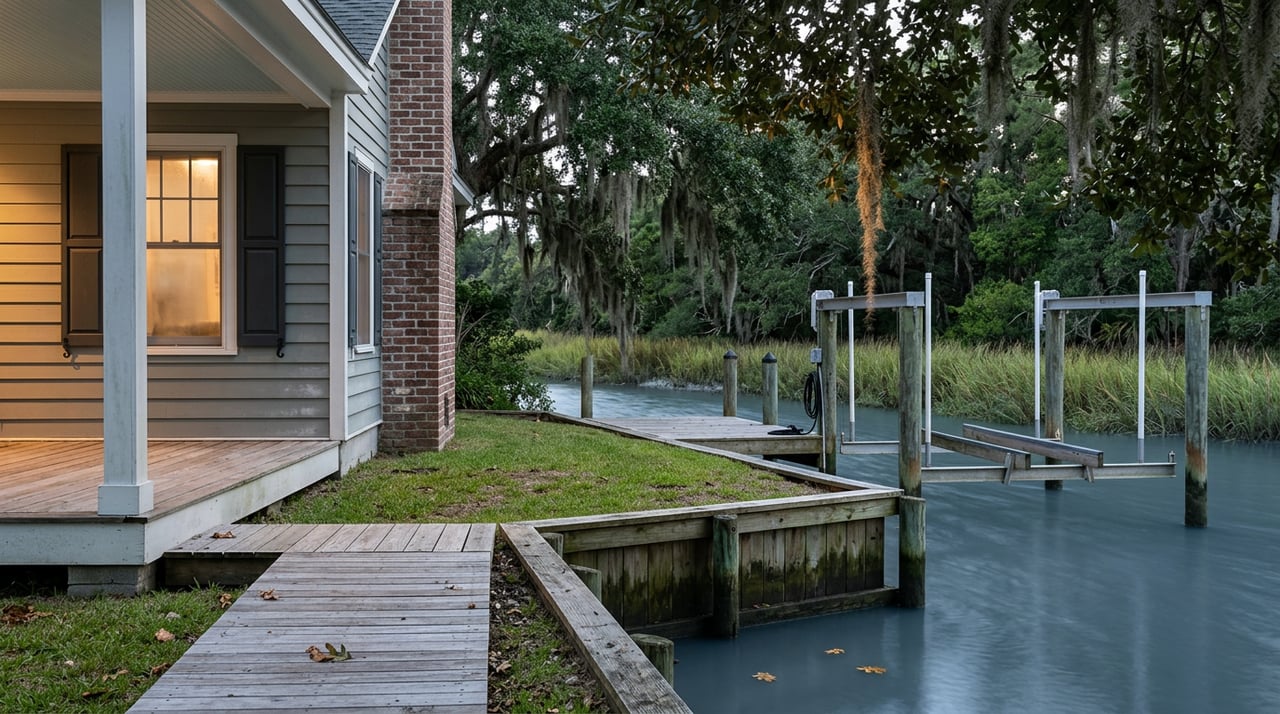
Dock condition is not an abstract issue in Yacht Club. In 2024 correspondence with DNR, the Yacht Club HOA requested permission to maintain the existing community dock on the Frederica River. The work described included replacing 45-foot support posts with 60-foot posts and reinforcing a walkway that had started to sink and become unstable.
For a buyer, this is useful local context. It shows why you should ask about the dock’s repair history, current condition, planned maintenance, and who pays for future structural work. If waterfront access is one of the main reasons you are interested in the neighborhood, the condition and upkeep of that infrastructure should be part of your decision.
Here are practical questions to verify for any Yacht Club property:
These questions can help you move from attraction to clarity.
Waterfront buyers should also plan ahead for flood insurance timing and cost. Glynn County says it participates in FEMA’s Community Rating System and is currently a Class 5 CRS community. According to the county, that gives flood insurance policyholders a 25% premium discount.
The county also notes that flood insurance policies have a 30-day waiting period before coverage begins. That timing matters if you are closing on a property and trying to coordinate protection without delays. Even in a desirable waterfront setting, practical planning remains part of a smart purchase.
A home in Yacht Club can offer an appealing mix of gated privacy, riverfront setting, and boating convenience. But the best buying decisions here usually come from slowing down and verifying the details at the parcel level. That means looking beyond the phrase deeded boat slip and confirming exactly how ownership, use, costs, and maintenance work for the specific property.
If you are comparing waterfront homes on St. Simons Island, this kind of review can save time and help you buy with confidence. A strong local guide can help you connect the listing language to the practical realities of tides, documents, dock condition, and community structure.
If you want experienced, parcel-level guidance as you explore Yacht Club and other gated waterfront opportunities on St. Simons Island, connect with Angela Harrison Team | Frederica Realty. Their consultative approach can help you evaluate the details that matter most and find the right fit on the Golden Isles.

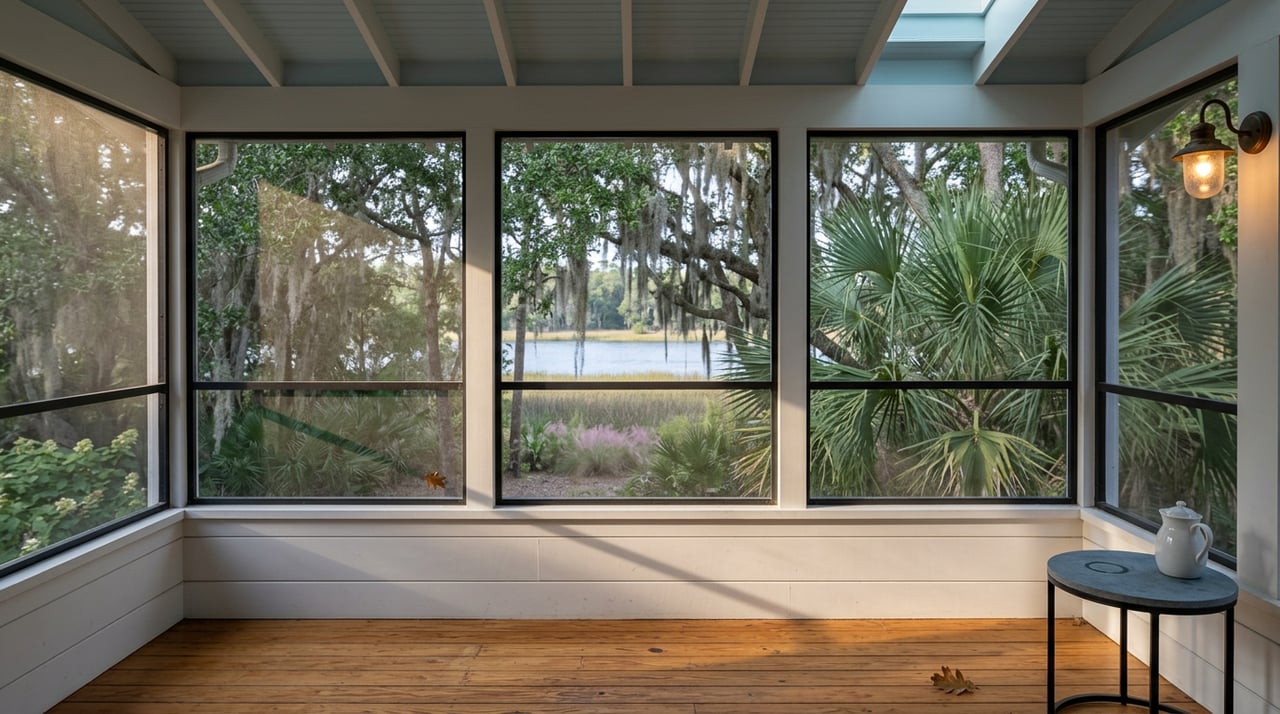
We invite you to explore the St. Simons and Sea Island Communities. Here, this island destination creates a lifestyle, where every luxury is designed to incorporate the area's breathtakingly beautiful natural surroundings and emerge organically from the natural landscape.