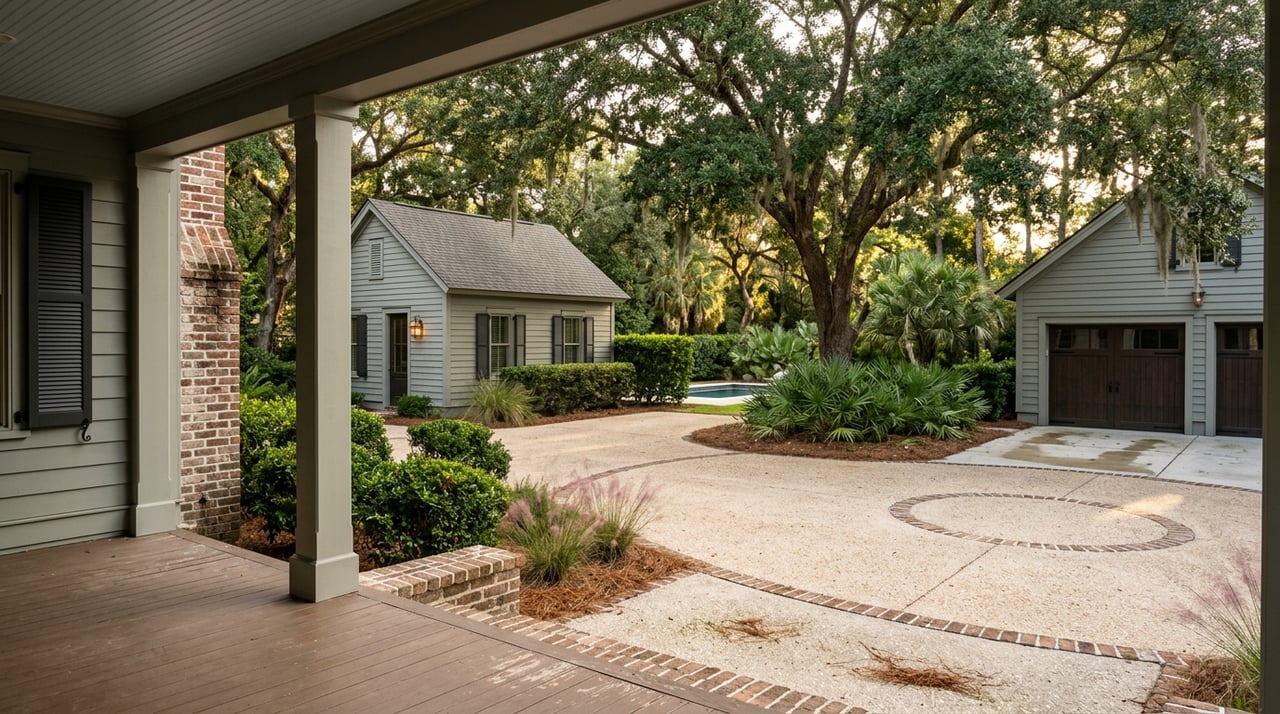
Planning a Frederica Estates Family Compound
June 18, 2026
June 18, 2026
If you are dreaming about more than one house on one property, Frederica Estates gives you a rare way to think bigger. Instead of planning a single luxury home, you may be able to create a private, multigenerational setting where parents, adult children, grandchildren, and guests each have space to gather and retreat. In Frederica Golf Club on St. Simons Island, that kind of long-range planning can work beautifully when it is grounded in the land, local rules, and a clear family vision. Let’s dive in.
Frederica Estates is designed differently from a typical neighborhood homesite offering. Official materials describe it as a limited collection of lakefront estate parcels within the private, gated Frederica community, with unusually large homesites intended for legacy-style ownership.
That distinction matters if you are planning for multiple generations. Frederica Estates is explicitly framed around family-compound living, and official materials state that each estate can support up to three estate homes. For buyers who want flexibility over time, that creates a planning opportunity that is hard to find elsewhere on St. Simons Island.
The broader Frederica setting adds to that appeal. Frederica Living describes the community as spanning 1,700 acres with 425 acres of interconnected lakes, with homesites offered in golf course, lakefront, riverfront, marshfront, and wooded settings.
Ownership at Frederica Estates also includes membership to Frederica Golf Club and a multigenerational Sea Island Club membership, subject to application and approval. Frederica Golf Club amenities listed by the community include a Tom Fazio championship course, clubhouse, practice facility, dining, boathouse, pool, tennis and fitness, club cottages, and pickleball courts.
The best multigenerational compounds usually feel like a private campus, not a cluster of unrelated buildings. In Frederica Estates, that approach makes sense because the land is large enough to create distance, preserve privacy, and organize daily life in a way that still feels connected.
A smart early step is to think of the property in zones. One zone can hold the main residence on the strongest lake edge or view corridor, another can support a guest house or next-generation cottage near the arrival area, and a third can sit farther back for more independence.
This kind of layout helps each household feel included without feeling crowded. It also gives you room to plan for changing needs over time, whether that means hosting extended visits, accommodating adult children, or creating a separate residence for long-term family use.
In Frederica, the landscape should lead the design. Official community materials emphasize architecture that sits within the natural beauty of the site, drawing from Spanish-inspired forms, tabby, Southern Vernacular, Mizner, and Lowcountry references.
For you as a buyer, that means the site plan should come before architectural details. Before anyone decides where the pool goes or how large a porch should be, it helps to understand the strongest views, mature tree patterns, natural privacy edges, and likely building pads.
On a large estate parcel, good placement can make the entire compound feel calm and effortless. It can also help preserve the qualities that make Frederica so distinctive, including canopy, water views, and the sense that homes belong in the landscape rather than sitting apart from it.
Every compound works better when the homes have a clear relationship to one another. The main house usually takes the primary visual position, while secondary homes are placed to support privacy, easier access, and independent day-to-day living.
That does not mean the secondary homes need to feel smaller in importance. It simply means each structure should have a role, whether it serves as a guest retreat, a residence for another generation, or a more flexible long-term living space.
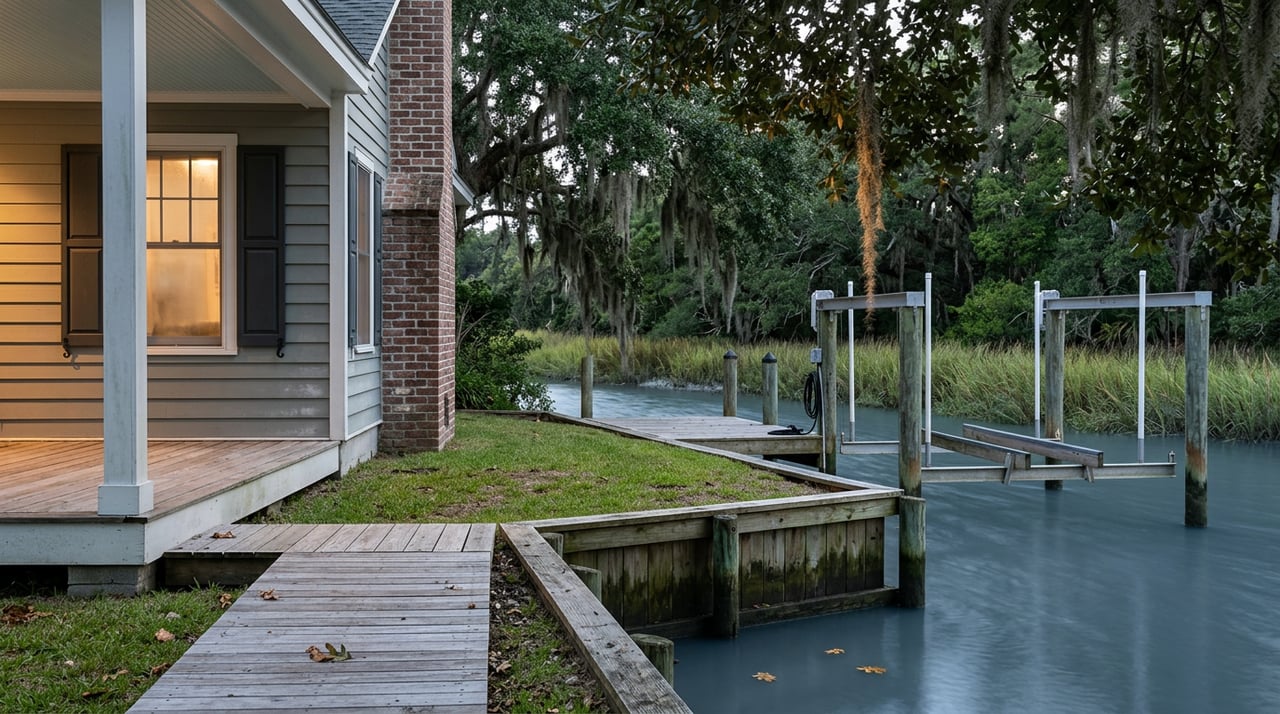
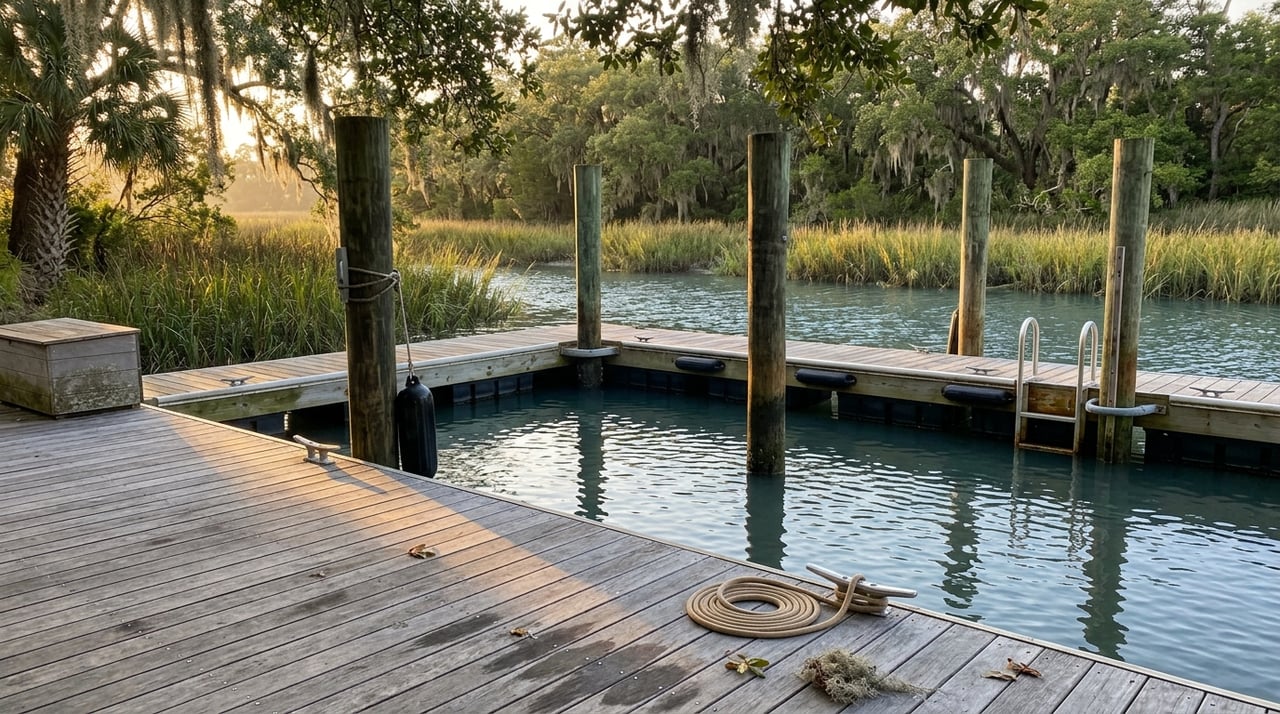
On lakefront property, views are often one of the most valuable site assets. If you place all structures too close to the best edge, you may lose openness and create unnecessary competition between homes.
A better strategy is to preserve the strongest view corridor for the main gathering spaces, then orient the other residences toward courtyards, side lawns, or secondary water views. That keeps the compound feeling spacious and balanced.
A compound vision still has to work within Glynn County's land-use framework. Because county zoning and subdivision rules were rewritten and adopted on April 16, 2026, with an effective date of July 1, 2026, it is important to verify the applicable standards for a parcel based on timing and current county review.
That is especially true on St. Simons Island, where Glynn County treats the island and Sea Island as Areas of Scenic Beauty and Historic Interest. Older code language also shows that low-density standards have long shaped residential development patterns here.
For planning purposes, the big takeaway is simple. You should expect real spacing between buildings, thoughtful site coverage review, and a process that depends on parcel-specific facts rather than broad assumptions.
Possibly, but the answer depends on parcel size, zoning, and permit timing. Glynn County's April 2026 announcement says accessory dwelling units on St. Simons Island will be allowed only on lots of one acre or larger and must still meet a 60% site-coverage requirement under the new ordinance framework.
That does not replace the need for parcel-level review. If you are sketching guest cottages, staff space, or flexible detached living areas, it is wise to confirm what the county and applicable review bodies will allow before the design goes too far.
Floodplain review is a major part of coastal planning. Glynn County states that if a home or business is in the floodplain, an elevation certificate is required to obtain a building permit.
The county also says that substantial improvements costing 50% or more of a building's market value trigger new-construction standards under NFIP rules. On a multibuilding estate, that makes early survey work, civil engineering, and drainage planning especially important.
On St. Simons Island, mature canopy is not just a visual amenity. County ordinance language says Glynn County aims to maintain at least 50% tree canopy on the island, and tree removal generally requires prior approval from planning and zoning.
For compound design, that means privacy planning and tree preservation often go hand in hand. Preserving live oaks and other mature canopy can support screening, reduce visual impact, and help the compound feel established from day one.
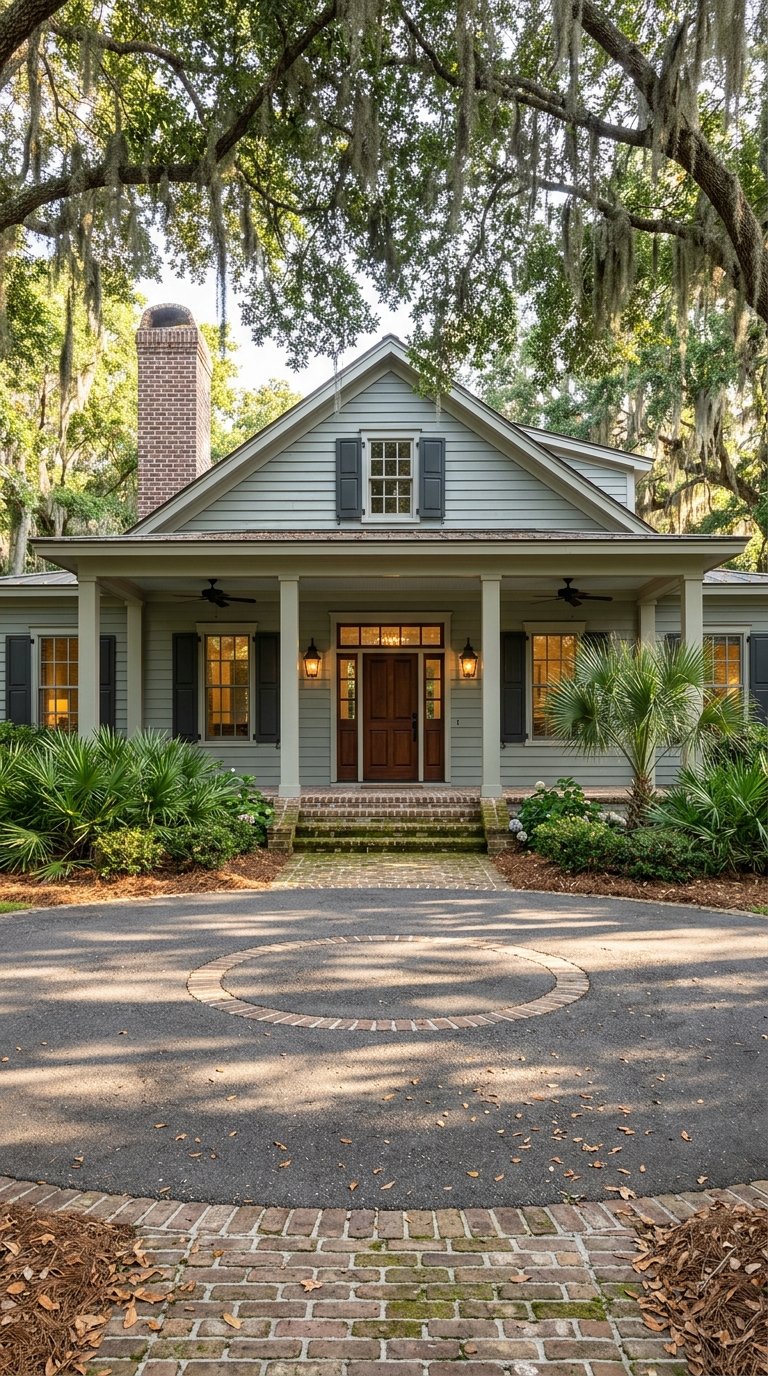
Large properties work best when arrival, guest movement, and service access are well organized. On an estate parcel, one controlled arrival drive with a loop or motor court often creates a cleaner first impression than several competing driveways.
That kind of hierarchy also helps separate public and private moments. Visitors can arrive smoothly, while family gathering areas stay quieter and less exposed.
A separate service lane can also be helpful if the site allows it. Keeping maintenance, deliveries, and day-to-day operations away from the main frontage usually makes the compound feel more polished and more private.
One of the biggest advantages of a multigenerational compound is that you do not have to duplicate every outdoor feature for every home. Instead, the property can include a shared amenity zone that brings everyone together while preserving the best building sites.
A centralized pool, pavilion, outdoor kitchen, fire pit, pickleball court, or play lawn can act as the social heart of the compound. When placed slightly away from the strongest primary house pad, these amenities can stay easy to access from all residences without overwhelming the main home.
This approach also fits Frederica's resort-style logic. The club's own amenity package includes pool, tennis, fitness, club cottages, and pickleball, so a private family compound can echo that same idea on a more personal scale.
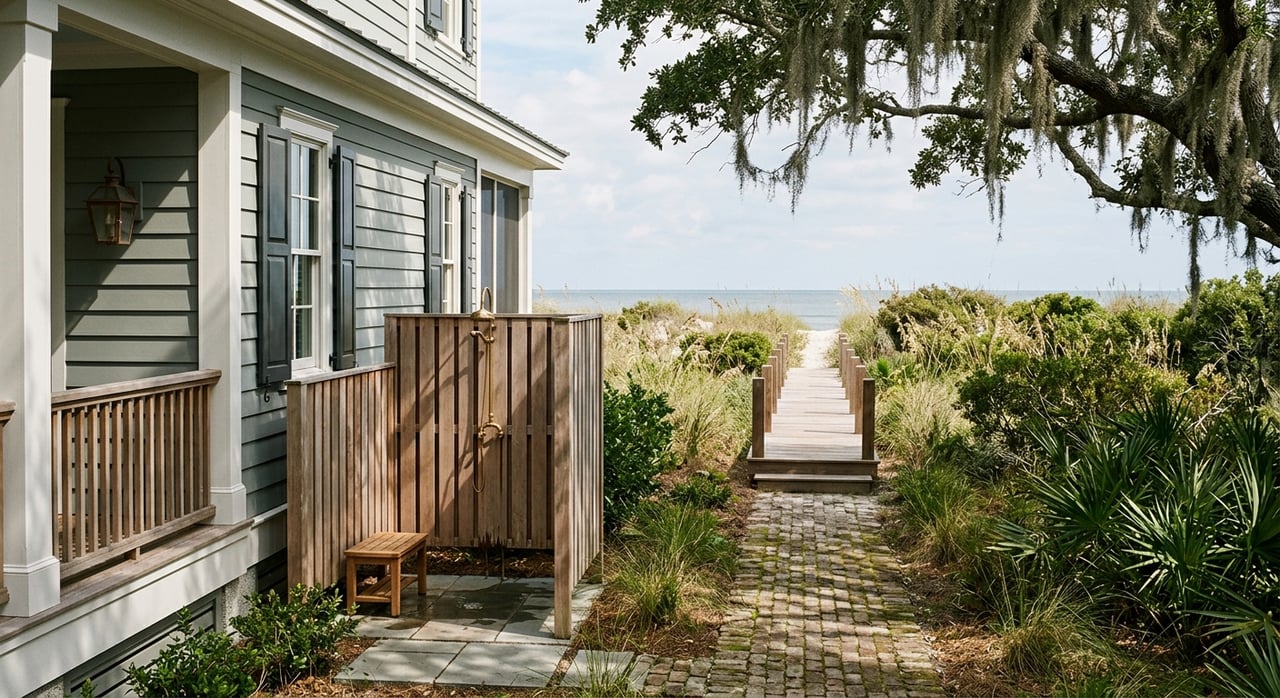
In a setting like Frederica, architectural style should support the land rather than compete with it. Frederica's architecture guidance points to Spanish-inspired forms, tabby, Southern Vernacular, Mizner, and Lowcountry references, all with an emphasis on blending into the natural surroundings.
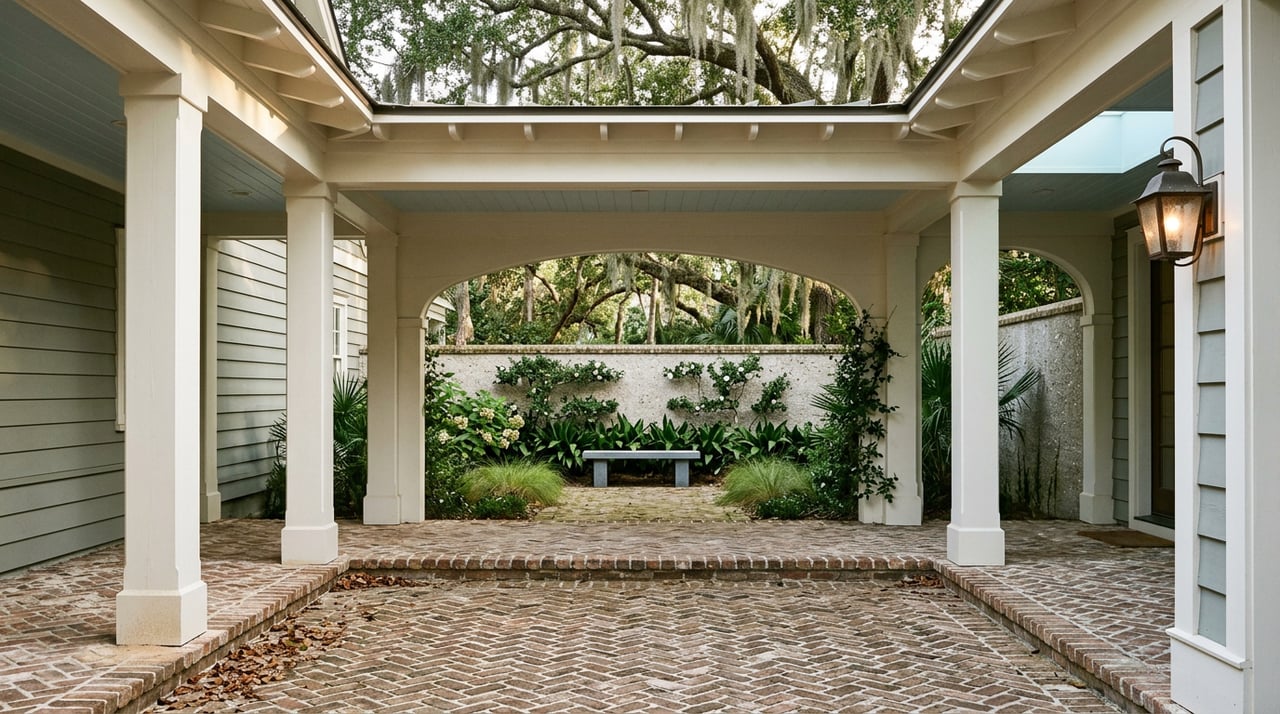
For your compound, that often translates into low-slung massing, deep porches, durable coastal materials, and rooflines that feel settled into the site. The goal is not to make each house identical, but to give the full property a shared language.
When the architecture is coordinated, the compound tends to feel intentional and enduring. That is especially important for a property designed for long-term family use rather than a shorter-term single-home build.
A compound of this scale usually needs more than a house plan. The essential team often includes an architect, landscape architect, civil engineer, surveyor, and a local real estate advisor who understands Frederica at the parcel level.
That local knowledge matters because no two estate sites are exactly alike. Floodplain conditions, canopy, driveway access, buffers, and ordinance timing can all shape what is practical on a specific parcel.
If you are considering Frederica Estates for a multigenerational plan, early guidance can save time and protect flexibility. A thoughtful process helps you evaluate not just what is possible on paper, but what will work beautifully for your family over time.
If you are exploring homesites or want to talk through how a multigenerational layout could work inside Frederica Golf Club, Angela Harrison Team | Frederica Realty can help you think through the land, the possibilities, and the next steps with local insight.
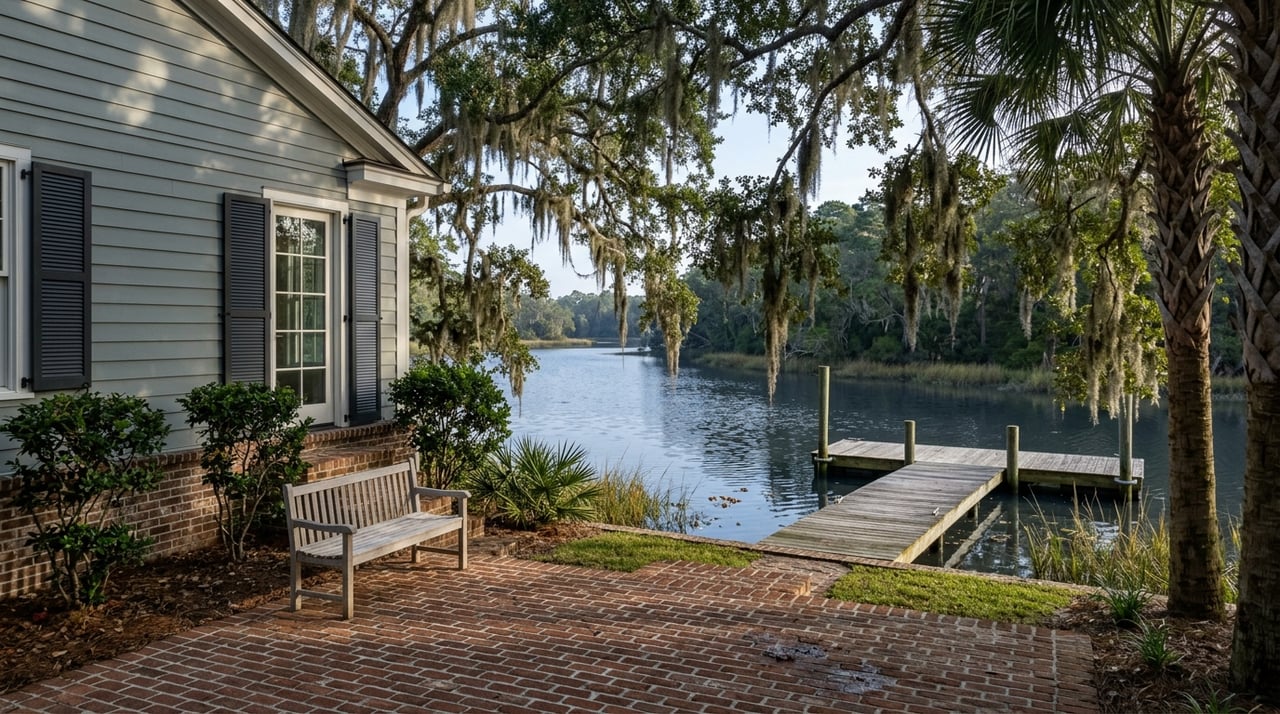
We invite you to explore the St. Simons and Sea Island Communities. Here, this island destination creates a lifestyle, where every luxury is designed to incorporate the area's breathtakingly beautiful natural surroundings and emerge organically from the natural landscape.